If you’ve been on YouTube long enough, you eventually realize a hard truth:
YouTube doesn’t reward hard work. It doesn’t reward effort.
It rewards being in the right position within its ecosystem.
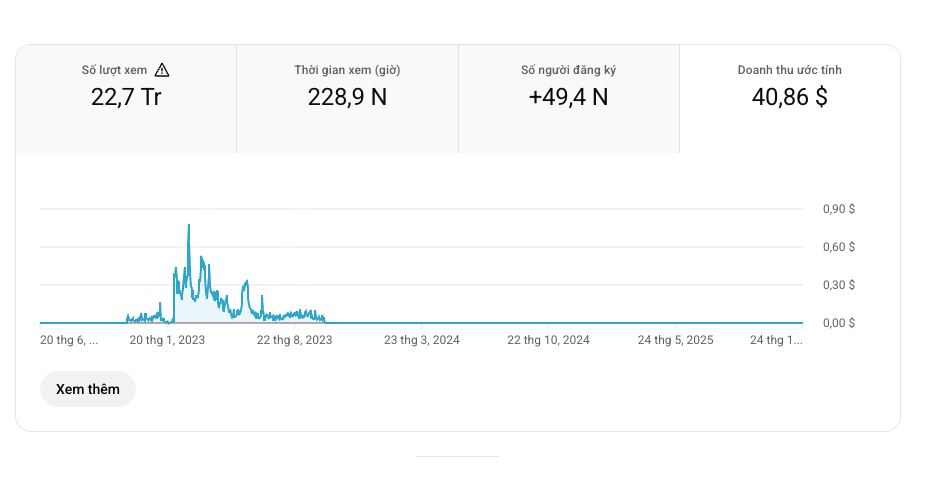
Many creators go through the same phase: uploading consistently, learning constantly, videos looking “good enough,” views growing, subscribers increasing… yet revenue stays close to zero. And the questions start creeping in: Am I bad at this? Does YouTube hate my channel? Did I choose the wrong path?
The truth is simpler — and harsher.
YouTube doesn’t hate anyone. It just doesn’t pay for positions that don’t generate economic value.
1. YouTube doesn’t pay for good videos — it pays for the audience
This is the foundation of everything.
YouTube doesn’t evaluate your video based on how much effort you put in.
It evaluates one thing only:
“How valuable is the viewer of this video to advertisers?”
With the same 1,000 views:
- Viewers watching purely for entertainment → very low ad value
- Viewers searching for solutions, finance, technology, services → advertisers pay significantly more
👉 Views can look identical.
👉 RPM can be worlds apart.
That’s why many channels look successful on the surface but struggle to survive, while others with modest views remain profitable and sustainable.
2. YouTube doesn’t just look at who is watching — it looks at why
Most people stop at demographics: age, gender, country.
The algorithm goes much deeper.
YouTube classifies viewers by intent:
- Watching to kill time
- Watching to understand
- Watching because they are about to make a decision
👉 High RPM almost always lives in category #3.
The same person:
- Watching casually → low RPM
- Watching while facing a real problem → higher RPM
- Watching right before buying, subscribing, or choosing → very high RPM
Timing matters as much as identity.
3. Why many high-RPM videos never go viral
Here’s something new creators often misunderstand:
High RPM does not mean viral.
YouTube runs two different distribution modes:
- Wide distribution for attention (entertainment, viral content)
- Narrow distribution for value extraction (decision-driven content)
Many high-RPM videos:
- never explode
- don’t generate massive comments
- aren’t pushed aggressively
But they are kept alive for a long time, repeatedly recommended to the right people, at the right moment.
👉 Quiet, but durable.
4. The biggest mistake beginners make: looking at YouTube from “me”
Beginners usually ask:
- “What do I like to make?”
- “What topic am I good at?”
Experienced creators start somewhere else:
- Where are businesses spending ad money?
- Which industries have high CPC and intense competition?
- Which audiences have high lifetime value?
If businesses must advertise to survive, YouTube must protect and retain viewers in those spaces.
That’s why finance, tech, education, health, insurance consistently outperform pure entertainment in RPM.
YouTube doesn’t use the first 30–90 seconds to judge if a video is “good.”
It uses that window to answer one question:
“Is this video reaching the right audience?”
The algorithm watches:
- Do viewers stay?
- Do they continue watching similar videos?
- Do they return when facing the same problem again?
Only when these signals align does YouTube:
- open targeted distribution
- attach stronger ads
- keep the video alive long-term
👉 RPM comes later — after YouTube confirms audience accuracy.
6. Views are emotion — RPM is economic reality
Views measure attention.
RPM measures value.
Some channels:
- chase virality
- burn out fast
- never see money
Others:
- move slower
- stay focused
- last for years
If revenue hasn’t arrived yet, it doesn’t mean you’re bad.
Often, it simply means you’re standing in the wrong place within the ecosystem.
7. Why serious creators need proper “testing infrastructure”
Finding the right position in the money flow can’t be guessed — it must be tested.
Different niches, audiences, geographies, formats.
And testing at scale quickly creates another problem:
account management, environments, and operational separation.
That’s why professional teams rely on infrastructure tools like MoreLogin:
- isolated browser profiles
- clean account environments
- structured permission management
- combined with cloud phones when testing apps or regional behaviors
👉 Not to “game” the system — but to test faster, safer, and with clarity, instead of wasting months on bad assumptions.
8. Final words from someone who’s been here long enough
YouTube doesn’t hate you.
It just doesn’t pay for where you’re currently standing.
The algorithm doesn’t ask whether a video is good.
It asks: Is this the right person, at the right moment, with the right intent?
If you’re clear-headed enough to adjust your position,
what you gain later will be far more sustainable than early luck.
9 thoughts on “🔕 VIEWS CAN BE HIGH — BUT IF YOU ATTRACT THE WRONG AUDIENCE, YOUTUBE STILL WON’T PAY YOU”